
Find St. Lucie County Warrant Records
St. Lucie County warrant records are maintained by the St. Lucie County Sheriff's Office and the Clerk of the Circuit Court in Fort Pierce. About 330,000 people live in this Treasure Coast county, which includes Port St. Lucie, one of the largest cities in Florida. The sheriff handles all warrant service and enforcement. The clerk stores court case records that contain bench warrants and capias orders. Active warrants can be searched through the free FDLE statewide system. Most warrant data in St. Lucie County is public under Florida law, and there are several ways to access it both online and in person.
St. Lucie County Quick Facts
St. Lucie Sheriff's Office Warrants
The St. Lucie County Sheriff's Office handles warrant enforcement for the entire county. The SLCSO main office is at 4700 W. Midway Road in Fort Pierce. Their phone number is (772) 462-7300. The warrants unit tracks down and arrests people with active warrants in St. Lucie County. They also coordinate with other agencies across the state through the FDLE system and work with the U.S. Marshals on fugitive cases.
St. Lucie County is part of the 19th Judicial Circuit, which also includes Indian River, Martin, and Okeechobee counties. Under Florida Statute 901.04, warrants are directed to all sheriffs statewide. A St. Lucie County warrant can be served by any sheriff in Florida. The SLCSO also picks up people wanted by other counties when they are found in St. Lucie County.
The SLCSO website provides contact info for their records section and tips on how to report someone with an outstanding warrant.
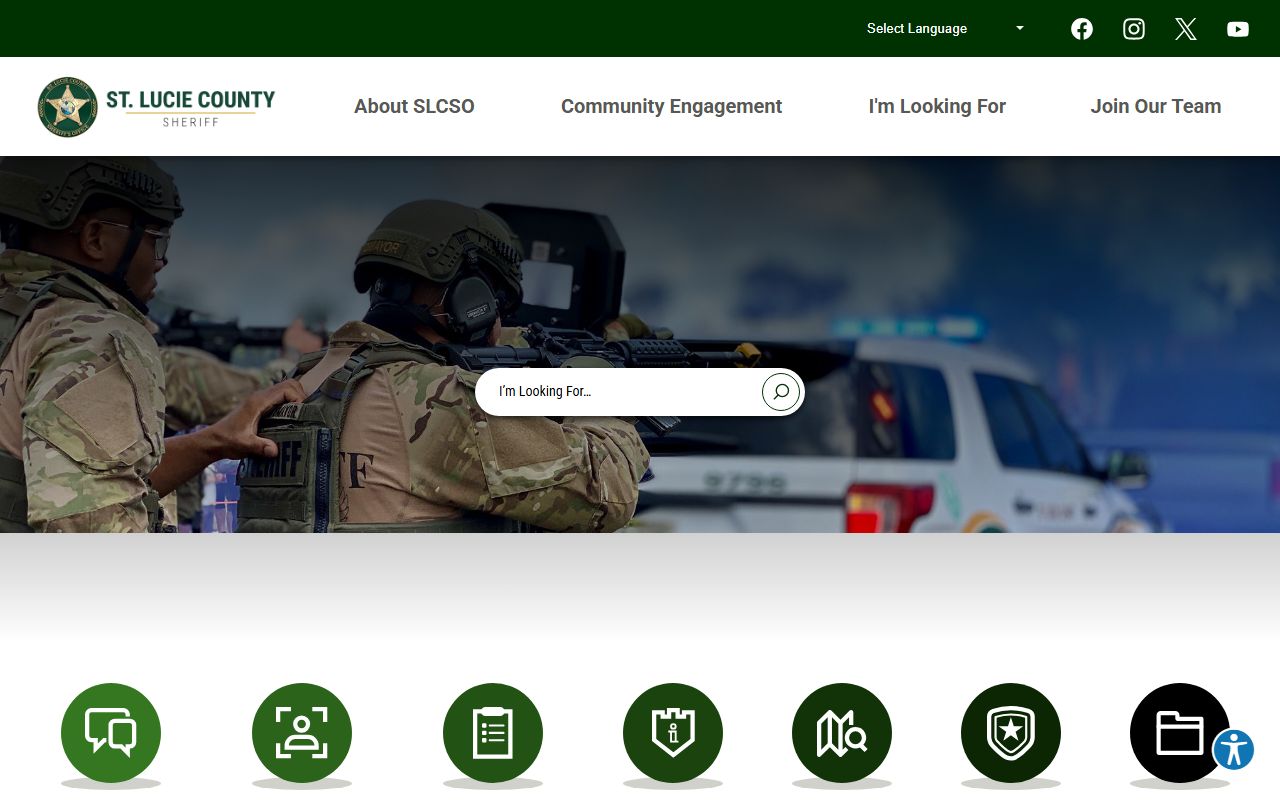
The sheriff's office does not run a public warrant search tool on its website. They send people to the FDLE Public Access System for active warrant checks. You can reach the records section by phone or visit the main office in Fort Pierce during regular hours.
| Sheriff's Office |
St. Lucie County Sheriff's Office 4700 W. Midway Road, Fort Pierce, FL 34981 Phone: (772) 462-7300 |
|---|---|
| Judicial Circuit | 19th Judicial Circuit |
Note: St. Lucie County warrants may take a few days to show up in the FDLE database after they are signed by a judge.
St. Lucie Clerk of Courts Records
The St. Lucie County Clerk of the Circuit Court maintains all court records in the county, including those with warrant activity. Bench warrants and capias orders appear in the case docket once the court enters them. The clerk's office is at 201 S. Indian River Drive in Fort Pierce, and their phone number is (772) 462-6900.

Their online case search lets you look up records by defendant name or case number. This is a good tool when you need to see the full docket on a specific case in St. Lucie County. Copies of court documents can be requested in person at the clerk's office or by mail. Under Florida Statute 119.07, anyone has the right to inspect and copy public records from Florida government agencies.
| Clerk of Courts |
St. Lucie County Clerk of the Circuit Court 201 S. Indian River Drive, Fort Pierce, FL 34950 Phone: (772) 462-6900 |
|---|---|
| Website | stlucieclerk.com |
How to Search St. Lucie Warrants
Start with the FDLE Public Access System to check for active warrants in St. Lucie County. The tool is free and open to the public. Type in a name and the system pulls up active warrants from all 67 counties. No login or account is needed. Results show the warrant type, the issuing agency, and basic details about the person named.
The St. Lucie County Clerk's online portal is another resource. It focuses on court case records rather than active warrant lists. You can find bench warrants and capias entries in case dockets there. For urgent matters, call the SLCSO at (772) 462-7300 or the clerk at (772) 462-6900.
Methods for searching St. Lucie County warrant records:
- FDLE Public Access System for active warrants statewide
- St. Lucie Clerk online portal for case dockets and bench warrants
- SLCSO phone line for warrant confirmation
- In-person visit to the clerk's office in Fort Pierce
Warrant Types in St. Lucie County
Several kinds of warrants get filed in St. Lucie County. Arrest warrants are the most common. A judge issues one after a law enforcement officer shows probable cause under Florida Statute 901.02. Bench warrants come from judges when someone misses a court date or disobeys a court order. Capias warrants serve a similar purpose and can be filed by the clerk. All of these become part of St. Lucie County warrant records.
Search warrants follow different rules. Under Florida Statute 933.07, they must be carried out within 14 days or they expire. Arrest warrants in St. Lucie County do not have an expiration date. They remain active until the person is found or a judge cancels the warrant. Violation of probation warrants and fugitive warrants from other jurisdictions are also enforced in St. Lucie County.
Note: Some warrants may exist as "pocket warrants" that have not yet been entered into any database, so a clean online search does not always mean no warrant exists.
What to Do About a Warrant
If you discover there is a warrant in your name in St. Lucie County, speak with an attorney before taking any steps. Going to the jail on your own without legal advice can make things worse. A lawyer can arrange a surrender and may be able to get bond set in advance. Licensed bail bondsmen in the Fort Pierce and Port St. Lucie area can help with posting bond once the amount is determined.
Under Florida Statute 901.16, the arresting officer must inform you that a warrant has been issued and why you are being arrested. The officer does not need to have the physical warrant at the time of arrest. Warrants in St. Lucie County do not expire. Even warrants that are years old can lead to arrest during a traffic stop or any contact with police.
Cities in St. Lucie County
St. Lucie County includes Fort Pierce, Port St. Lucie, and several smaller communities. All warrant records go through the St. Lucie County Sheriff's Office at the county level.
Nearby Counties
These counties border St. Lucie County on the Treasure Coast. Warrants are filed in the county where the case started. Check the location of the offense to find the right jurisdiction.