
Martin County Warrant Records
Martin County warrant records are maintained by the Martin County Sheriff's Office and the Clerk of the Circuit Court in Stuart. The county has about 160,000 residents and sits along the Treasure Coast between Palm Beach County and St. Lucie County. Martin County is part of the 19th Judicial Circuit, which also includes Indian River, Okeechobee, and St. Lucie counties. Warrant records are public and searchable through multiple sources.
Martin County Quick Facts
Martin County Sheriff's Office Warrants
The Martin County Sheriff's Office handles warrant service and criminal investigations throughout the county. The main office is at 800 SE Monterey Road in Stuart. Call (772) 220-7000 for general inquiries. The sheriff's office has dedicated units that handle warrant enforcement, fugitive apprehension, and extradition matters.
Under Florida Statute 901.04, warrants are directed to all sheriffs in the state. This means a warrant issued in Martin County is enforceable anywhere in Florida. Martin County deputies can also serve warrants from other counties if they encounter a wanted person during a traffic stop or other law enforcement contact. The agency enters warrant data into the FDLE statewide system, making it searchable online.
| Sheriff's Office |
Martin County Sheriff's Office 800 SE Monterey Road, Stuart, FL 34994 Phone: (772) 220-7000 |
|---|---|
| Hours | Monday through Friday, 8:00 AM to 5:00 PM |
Martin County Clerk of the Circuit Court
The Martin County Clerk of the Circuit Court maintains all court case records in the county. The office is at 100 SE Ocean Boulevard in Stuart. The phone number is (772) 288-5576. When a judge issues a bench warrant or capias in a Martin County case, the clerk records it in the official case docket.
The Martin County Clerk has an online search tool on their website that lets you look up court cases by name or case number.
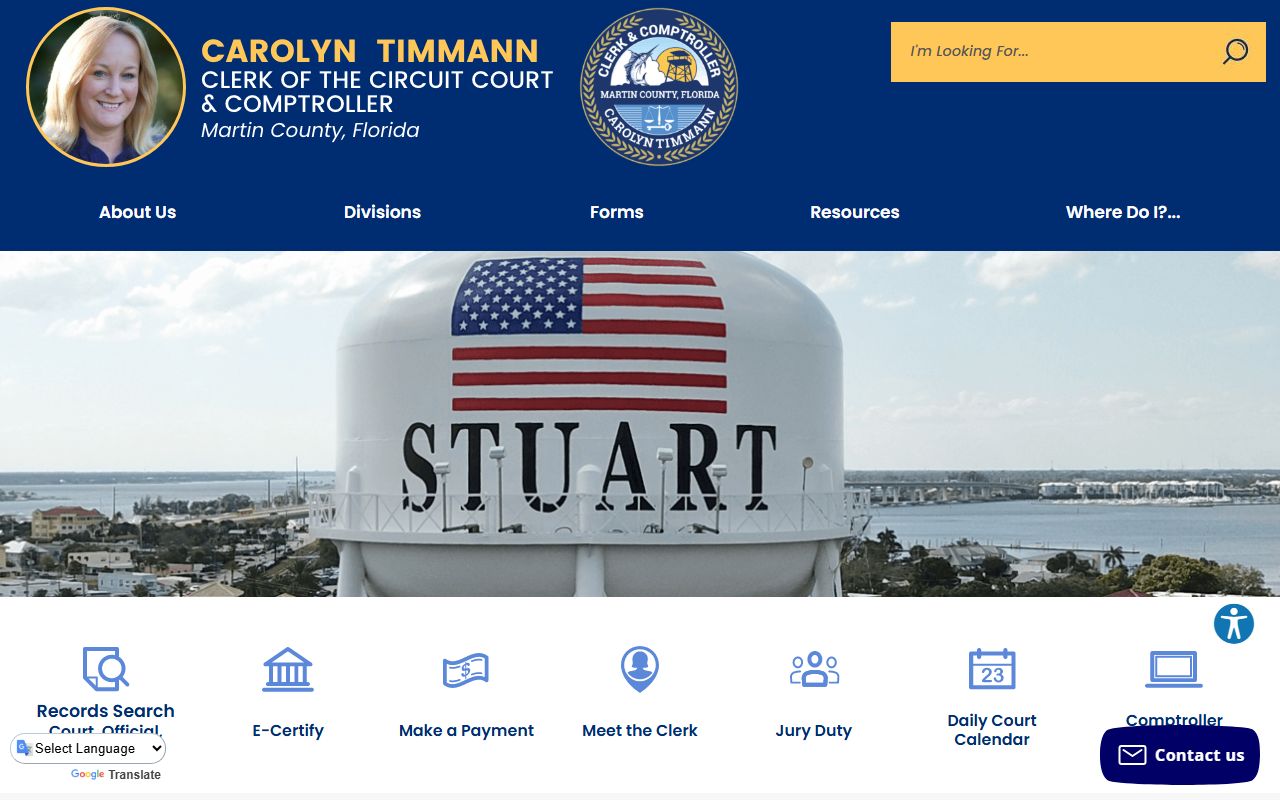
Criminal case dockets show bench warrants and capias entries. This tool is useful when you need details about a specific case that might not appear on the FDLE statewide system. Not every bench warrant gets entered into the state database, but it will show up in the clerk's local records.
| Clerk of Courts |
Martin County Clerk of the Circuit Court 100 SE Ocean Boulevard, Stuart, FL 34994 Phone: (772) 288-5576 |
|---|
Note: The Martin County Clerk's online system may require you to agree to terms of use before accessing case records.
How to Search Martin County Warrants
You have several options for searching warrant records in Martin County. The quickest is the FDLE Public Access System. Go to the Wanted Persons page and type in a name. The system is free and needs no account. It pulls active warrant data from agencies in all 67 Florida counties, including the Martin County Sheriff's Office.
The second option is the Martin County Clerk's online case search at martinclerk.com. Search for criminal cases by defendant name. Open the case record and check the docket for warrant entries. Bench warrants and capias orders appear as docket events. This can catch warrants that have not been uploaded to the FDLE system yet.
For in-person searches, visit the clerk's office at the Martin County Courthouse in Stuart or contact the sheriff's office. Phone calls are another option. Under Florida Statute 119.07, both the sheriff and the clerk must provide access to public records. The cost is limited to copying fees.
Warrant Types in Martin County
Arrest warrants are the most common type filed in Martin County. A judge signs one after reviewing probable cause from law enforcement. Florida Statute 901.02 lays out the requirements. The warrant must name the person and state the crime. These warrants do not expire.
Bench warrants are issued by judges when defendants do not show up for court. In Martin County, this happens in everything from traffic cases to serious felonies. The judge issues the warrant at the missed hearing. A capias is similar and can come from the clerk or the judge. Both types go into the court record and lead to arrest if the person is found.
Search warrants are time-sensitive. Under Florida Statute 933.07, they must be executed within 14 days or they expire. Search warrants authorize officers to look through a specific place for specific evidence. After execution, the affidavit and return become public records. Arrest warrants, on the other hand, stay active forever until the court resolves them.
Public Access to Martin County Warrants
Florida's Sunshine Law is one of the broadest public records laws in the country. Under Florida Statute 119.07, warrant records in Martin County are open to anyone. You do not need to be the person named on the warrant. You do not need to be a Martin County resident. No reason is required for your request.
Both the sheriff's office and the clerk of court are covered by this law. You can submit a records request by phone, in writing, or in person. The agency can charge a small fee for copies. Standard rates are usually about $0.15 per page. Certified copies cost more. If an agency refuses to release a record, they must cite a specific legal exemption.
Active criminal investigation files can be kept confidential while the case is ongoing. Search warrant affidavits stay sealed during the investigation. But once the warrant is served, the records become public. The Florida Sheriffs Association has links to every county sheriff in the state for cross-county research.
Note: Martin County processes a high volume of court cases through the 19th Judicial Circuit, so the clerk's online tool is often the most efficient way to check case-level warrant data.
What to Do About a Martin County Warrant
Call a lawyer before anything else. A criminal defense attorney can verify the warrant, check the charges, and plan the best approach. Under Florida Statute 901.16, the officer making an arrest must tell you that a warrant has been issued. They need to state the reason for the arrest. The physical warrant does not have to be shown at the time of arrest, but must be produced if asked.
If you surrender, you go into custody at the Martin County Jail. Bond gets set based on the charges. A bail bondsman can help post bond so you can get out after processing. Some warrants carry no bond, especially for probation violations. In those cases, you stay in jail until a judge sets a hearing.
Do not ignore a warrant. Arrest warrants in Florida have no expiration date. You can be picked up during a traffic stop on I-95, during a routine background check, or at the airport. The Martin County Sheriff's Office regularly assists other agencies with warrant roundups and fugitive operations. Taking care of the warrant sooner is always the better path. The Florida Courts website has more information about the 19th Judicial Circuit if you need to understand how cases are handled in Martin County.
Nearby Counties
Martin County sits between Palm Beach County to the south and St. Lucie County to the north. If a warrant was issued near a county line, it could be filed in one of these neighboring jurisdictions.