
Search St. Johns County Warrant Records
St. Johns County warrant records are held by the St. Johns County Sheriff's Office and the Clerk of the Circuit Court in St. Augustine. The county has about 270,000 residents and has been one of the fastest-growing areas in Florida for years. Warrant data here is public under the Sunshine Law. You can search for active warrants through the free FDLE statewide database or check case dockets through the clerk's online tools. The sheriff's office handles all warrant enforcement, while the clerk stores the court records that include bench warrants and capias orders filed in St. Johns County.
St. Johns County Quick Facts
St. Johns Sheriff's Office Warrants
The St. Johns County Sheriff's Office is responsible for warrant enforcement across the county. Their main office is at 4015 Lewis Speedway in St. Augustine. You can call them at (904) 824-8304. The SJSO runs a warrants division that works with local and state law enforcement to track down and arrest people who have active warrants in St. Johns County. They also work with the U.S. Marshals on fugitive cases when needed.
St. Johns County falls in the 7th Judicial Circuit, which also covers Flagler, Putnam, and Volusia counties. A warrant signed by a judge in St. Johns County gets entered into the statewide system. Under Florida Statute 901.04, warrants go out to all sheriffs in Florida. So a warrant from St. Johns County can be served anywhere in the state, and the SJSO can pick up people wanted in other counties too.
The SJSO website provides details on how to submit records requests and report tips about wanted persons in St. Johns County.
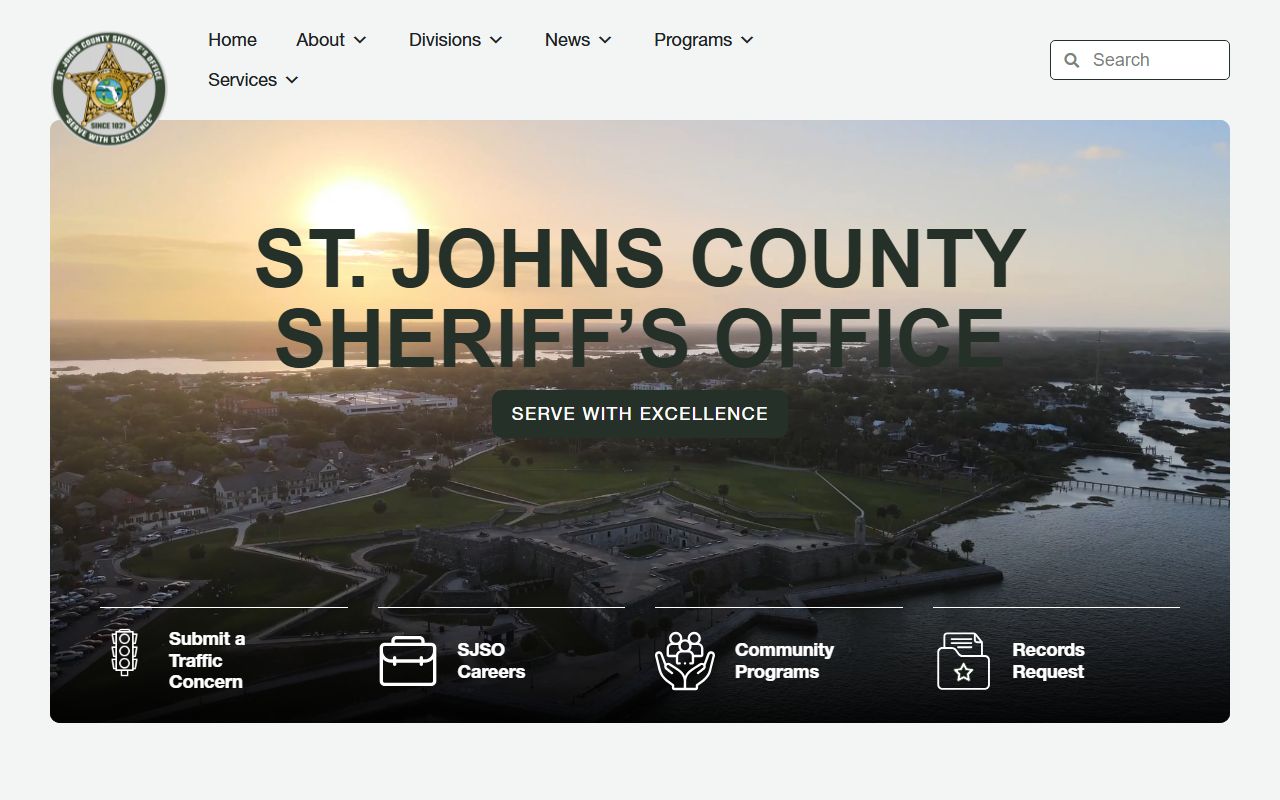
For a quick warrant check, the SJSO directs the public to the FDLE Public Access System. The sheriff's website does not have its own warrant lookup tool, but you can reach their records division by phone during business hours for specific questions about St. Johns County warrants.
| Sheriff's Office |
St. Johns County Sheriff's Office 4015 Lewis Speedway, St. Augustine, FL 32084 Phone: (904) 824-8304 |
|---|---|
| Judicial Circuit | 7th Judicial Circuit |
St. Johns Clerk of Courts Records
The St. Johns County Clerk of the Circuit Court maintains court records that include warrant information. Bench warrants and capias orders issued by judges in St. Johns County show up in case dockets. The clerk's office is at 4010 Lewis Speedway in St. Augustine. Phone is (904) 819-3600. You can visit in person to look at records or request copies.
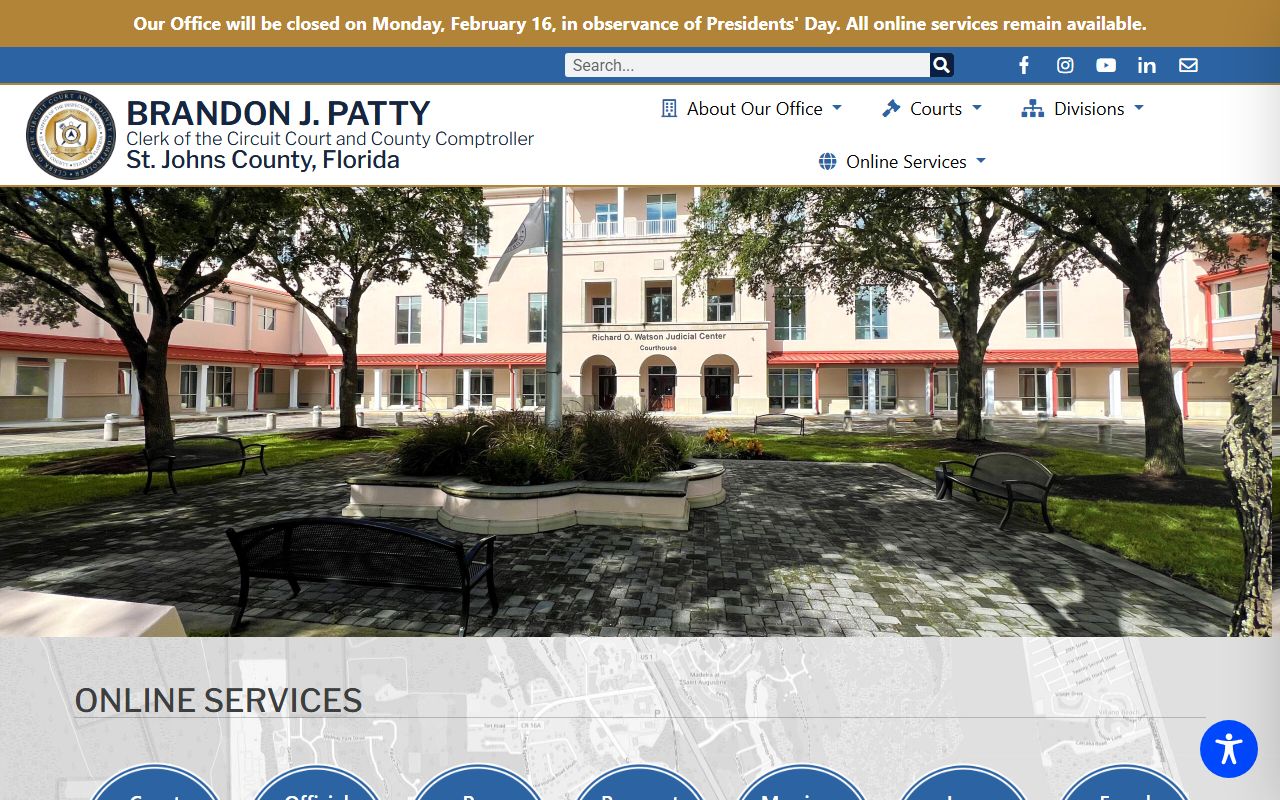
The clerk runs an online case search tool where you can look up records by name or case number. Warrant activity appears in the docket once the court enters it. This is a good option when you need details about a specific case in St. Johns County rather than just checking if a warrant exists. Under Florida Statute 119.07, all court records are open to the public unless a judge has sealed them.
| Clerk of Courts |
St. Johns County Clerk of the Circuit Court 4010 Lewis Speedway, St. Augustine, FL 32084 Phone: (904) 819-3600 |
|---|---|
| Website | stjohnsclerk.com |
Note: St. Johns County has grown fast, so warrant volume has gone up in recent years along with the population.
How to Search St. Johns County Warrants
The FDLE Public Access System is the best free tool for checking active warrants in St. Johns County. Go to the wanted persons search and type in the name you want to check. No account is needed. The results show active warrants from all 67 Florida counties, including St. Johns. Each result lists the warrant type and the agency that filed it.
You can also use the St. Johns County Clerk's online system. That tool is more useful for checking case dockets than for finding active warrants. It shows bench warrants and capias entries that appear in court records. For direct questions about a specific warrant, call the sheriff's office at (904) 824-8304 during business hours.
Here is how to search for warrant records in St. Johns County:
- FDLE Public Access System for statewide active warrants
- St. Johns Clerk online case search for bench warrants and dockets
- SJSO by phone for warrant confirmation
- In-person request at the clerk's office in St. Augustine
Warrant Types in St. Johns County
Arrest warrants are the most common type in St. Johns County. A judge signs one after law enforcement presents probable cause, as required by Florida Statute 901.02. Bench warrants get issued when someone does not show up for a court hearing. Capias warrants come from the clerk's office and work in a similar way. All of these end up in the St. Johns County warrant records.
Search warrants have an expiration date. Under Florida Statute 933.07, a search warrant must be executed within 14 days. Arrest warrants in St. Johns County do not expire. They stay active until the person is found or a judge recalls the warrant. Violation of probation warrants and fugitive warrants from other states also get served here. Old warrants can still lead to an arrest years after they were issued.
What to Do About a Warrant
If you learn there is a warrant for you in St. Johns County, talk to a lawyer before doing anything. Do not walk into the sheriff's office or jail without legal counsel. An attorney can help you plan how to handle the situation and may be able to arrange a bond before you surrender. Under Florida Statute 901.16, the arresting officer must tell you that a warrant has been issued and why you are being arrested.
Do not ignore it. Warrants in St. Johns County stay active forever. A traffic stop or any contact with law enforcement can lead to an arrest on an old warrant. Taking care of it on your terms gives you more control over the outcome.
Nearby Counties
St. Johns County sits along the northeast coast of Florida. If you are not sure which county filed a warrant, check where the offense happened. Warrants are filed in the county where the case started.