
Find Warrant Records in Nassau County
Nassau County warrant records are kept by the Nassau County Sheriff's Office and the Clerk of the Circuit Court. The county has roughly 90,000 residents and sits in the northeast corner of Florida, just north of Jacksonville. Nassau County is part of the 4th Judicial Circuit, which also includes Clay, Duval, and St. Johns counties. This is a fast-growing county, and all warrant records are public under Florida's Sunshine Law.
Nassau County Quick Facts
Nassau County Sheriff's Office Warrants
The Nassau County Sheriff's Office handles all warrant service in the county. The main office is at 76001 Bobby Moore Circle in Yulee. Their phone number is (904) 225-0174. The sheriff's office covers patrol, criminal investigations, detention, and warrant enforcement for all of Nassau County, including Amelia Island and the Fernandina Beach area.
Nassau County sits right next to Duval County (Jacksonville), and the two agencies work together often. Under Florida Statute 901.04, warrants are directed to all sheriffs in Florida. A Nassau County warrant can be served by Jacksonville police or any other Florida law enforcement agency. The proximity to the Georgia state line also means that people with Nassau County warrants sometimes get flagged during NCIC checks in Georgia.
The Nassau County Sheriff's Office enters active warrant data into the FDLE statewide system, making it searchable online.
The FDLE Public Access System is the primary online tool for checking whether someone has an active warrant in Nassau County.
| Sheriff's Office |
Nassau County Sheriff's Office 76001 Bobby Moore Circle, Yulee, FL 32097 Phone: (904) 225-0174 |
|---|---|
| Hours | Monday through Friday, 8:00 AM to 5:00 PM |
Nassau County Clerk of the Circuit Court
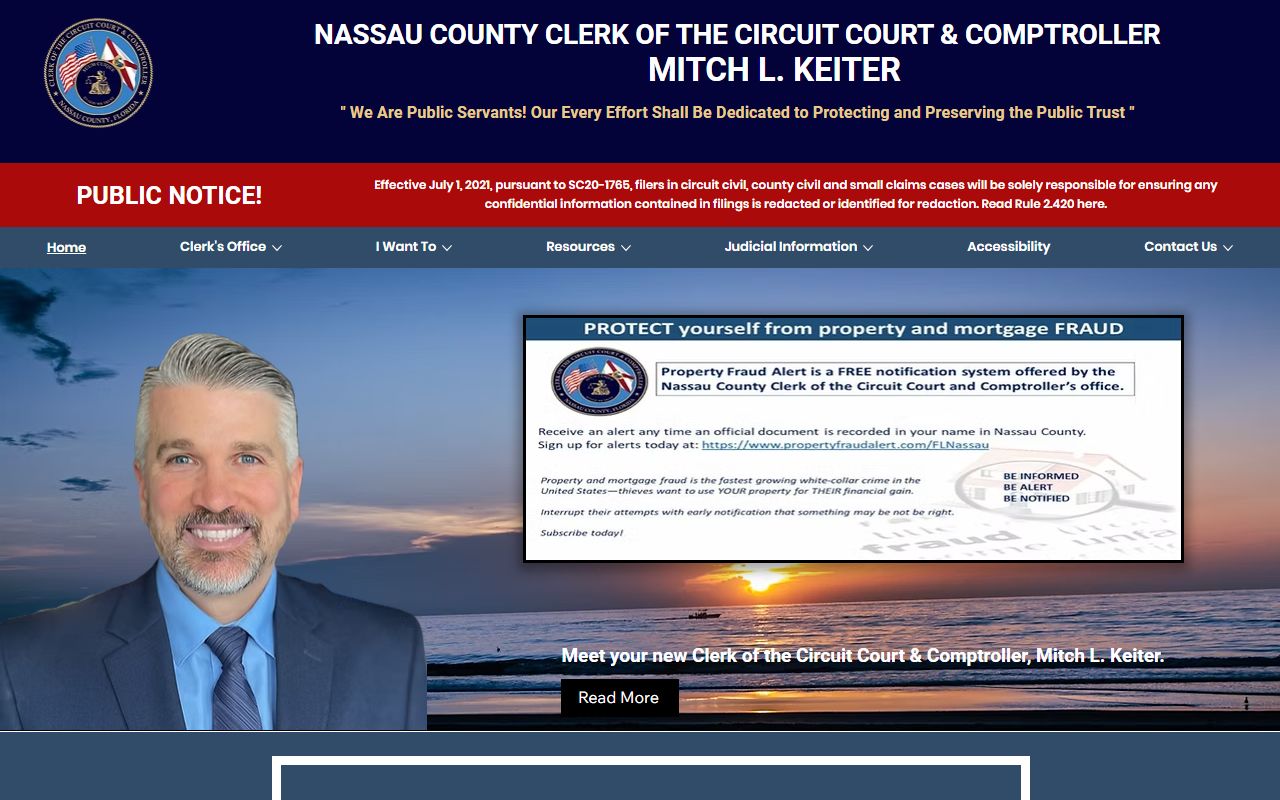
The Nassau County Clerk of the Circuit Court keeps all court records in the county. The office is at 76347 Veterans Way in Yulee. Call (904) 548-4600 for questions. When a judge in the 4th Judicial Circuit issues a bench warrant or capias in a Nassau County case, the clerk records it in the official case docket.
The Nassau County Clerk has an online case search tool on their website. You can look up criminal cases by name or case number. Bench warrants and capias entries show up in the case docket. This is a useful tool because not every bench warrant ends up in the FDLE statewide database. If someone missed a court date in Nassau County, the bench warrant might only appear in the clerk's system.
| Clerk of Courts |
Nassau County Clerk of the Circuit Court 76347 Veterans Way, Yulee, FL 32097 Phone: (904) 548-4600 |
|---|
Note: Nassau County moved many government offices to the Yulee area in recent years, so double-check the address before visiting in person.
How to Search Nassau County Warrants
The FDLE Public Access System is the best starting point. Visit the Wanted Persons search page and enter the name you want to check. The search is free and open to everyone. No login needed. Results cover all 67 Florida counties including Nassau.
For court-level data, check the Nassau County Clerk's online search at nassauclerk.com. Pull up criminal cases and look through the docket entries for warrant activity. This can reveal bench warrants that have not been entered into the statewide FDLE system.
You can also call the sheriff's office at (904) 225-0174 or the clerk at (904) 548-4600. Under Florida Statute 119.07, both agencies are required to provide access to public records. You do not have to give a reason. They can charge for copies but cannot charge just for looking at records.
The 4th Judicial Circuit is one of the busiest in Florida because it includes Duval County. Nassau County benefits from some of the shared technology and systems used across the circuit, which helps keep records more current than in some of the smaller, more isolated circuits.
Warrant Types in Nassau County
Nassau County courts issue several types of warrants. Arrest warrants are the most common. Under Florida Statute 901.02, a judge signs an arrest warrant after reviewing a sworn affidavit from law enforcement showing probable cause. The warrant names the person and describes the offense. These warrants never expire.
Bench warrants are issued when a defendant fails to appear for court. In Nassau County, this happens across all case types. The judge issues the warrant at the hearing, and the clerk enters it into the system. The person then has an active warrant on top of whatever the original charge was. A capias is similar and may come from the judge or the clerk.
Search warrants allow officers to search a specific location for evidence. Under Florida Statute 933.07, search warrants must be served within 14 days. After that deadline, they are no longer valid. Arrest warrants and bench warrants in Nassau County stay active forever until the court deals with them.
Public Records and the Sunshine Law
Warrant records in Nassau County are public records under Florida law. Florida Statute 119.07 gives anyone the right to inspect and copy records held by government agencies. You do not need to be the person named in the warrant. No reason is needed. The law applies to both the sheriff and the clerk in Nassau County.
Certain records are exempt from disclosure. Active criminal investigation files can be kept private. Search warrant affidavits stay sealed while an investigation is ongoing. But once a warrant is served and an arrest is made, the records become open. The arrest report, booking photo, and warrant itself are all public at that point.
The Florida Courts website has information about the 4th Judicial Circuit. The Florida Sheriffs Association links to all county sheriff offices in the state. Both are good resources if you need to search for warrant records across multiple counties.
Note: Nassau County's population has grown fast in recent years, which means the volume of court cases and warrants has also increased compared to a decade ago.
What to Do About a Nassau County Warrant
Hire a lawyer first. A criminal defense attorney can check the details of the warrant and help you plan. Going to the Nassau County Jail on your own without advice can cause problems you could have avoided. Under Florida Statute 901.16, the officer arresting you must state that a warrant exists and give the reason for the arrest. The officer does not need the physical warrant in hand.
If you surrender on a warrant, you are taken into custody and processed through booking. Bond is set after that. A bail bondsman can help get you out. In Nassau County, the jail is on Bobby Moore Circle in Yulee, near the sheriff's main office. Some warrants carry no bond. Violation of probation warrants, for example, usually require a judge to set bond at a hearing.
Warrants do not expire. A Nassau County warrant from years ago is still active today. Living close to Jacksonville does not help you avoid it either. Nassau County and Duval County law enforcement share information constantly. A traffic stop in either county can turn up warrants from the other. Handle the warrant on your own terms instead of getting caught off guard.
Nearby Counties
Nassau County sits at the northeast tip of Florida, bordering Georgia to the north and Duval County to the south. Check the county where the offense occurred if you are unsure where a warrant was filed.