
Find Miami-Dade County Warrant Records
Miami-Dade County warrant records are held by the Miami-Dade Sheriff's Office and the Clerk of Courts. With about 2.7 million people, this is the most populous county in Florida. The sheriff runs a Warrants Bureau that handles felony apprehension, extraditions, and round-the-clock warrant checks for law enforcement across the country. You can search for active warrants through the FDLE statewide database or go through the clerk's online case search tool. Miami-Dade County processes thousands of warrant records each year, and most of this data is open to the public under Florida's Sunshine Law.
Miami-Dade County Quick Facts
Miami-Dade Sheriff's Office Warrants
The Miami-Dade Sheriff's Office handles all warrant records in the county. Their Warrants Bureau is one of the largest in Florida. It runs several units that track and arrest people with outstanding warrants in Miami-Dade County. The bureau operates a desk 24 hours a day, seven days a week, and provides warrant checks for law enforcement agencies across the nation. If you need to check on a warrant in Miami-Dade County, start with the FDLE Public Access System, which pulls data from all 67 Florida counties including Miami-Dade.
The Miami-Dade Sheriff's Office website has details on how to request records and check on warrant activity in the county.
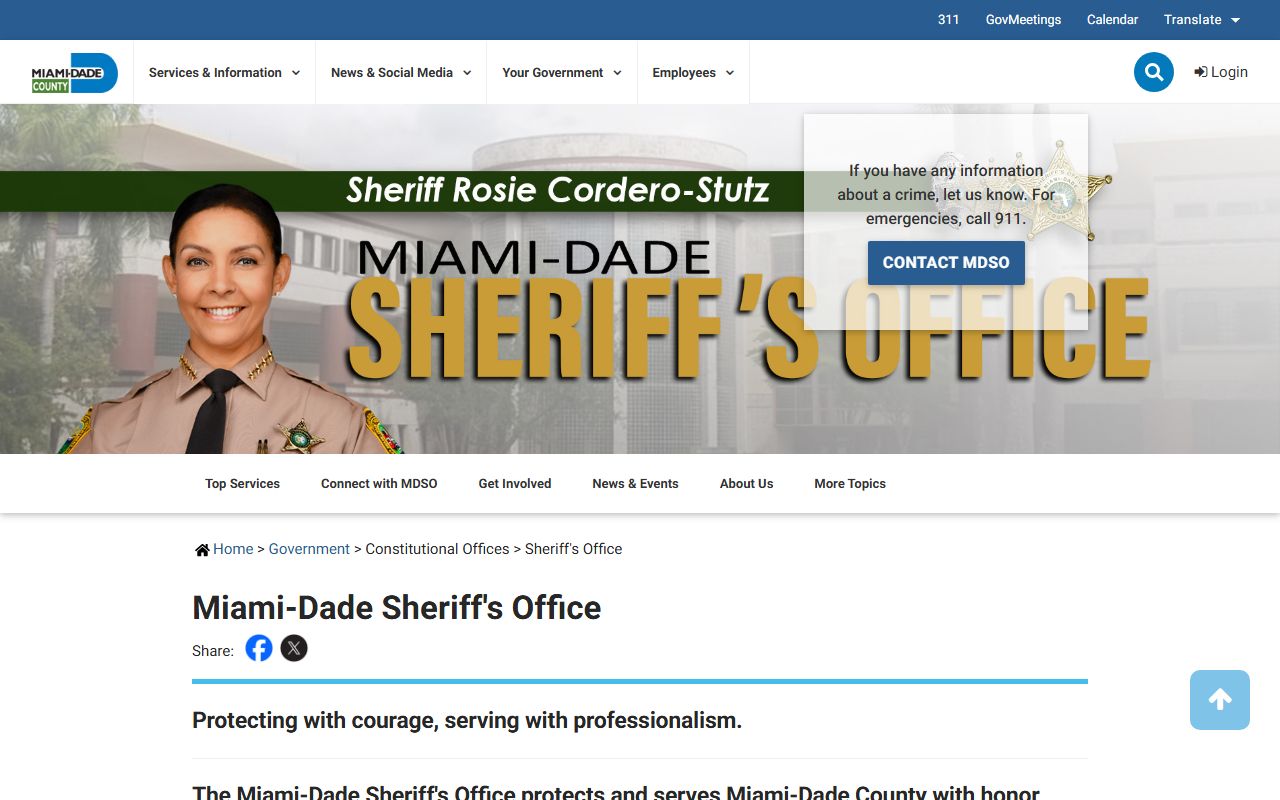
You can also reach the sheriff's records section by email at recordsrequest@mdso.com. In-person visits are by appointment only at 9105 NW 25th Street in Doral. Walk-ins are not accepted. Hours run Monday through Friday from 9:00 AM to 4:30 PM.
| Sheriff's Office |
Miami-Dade Sheriff's Office 9105 NW 25th Street, Doral, FL 33172 Phone: (305) 471-3220 |
|---|---|
| Warrants Bureau | Phone: (305) 471-1700 |
| Records Request | Email: recordsrequest@mdso.com In-person by appointment only |
| Hours | Monday through Friday, 9:00 AM to 4:30 PM |
Miami-Dade Warrants Bureau
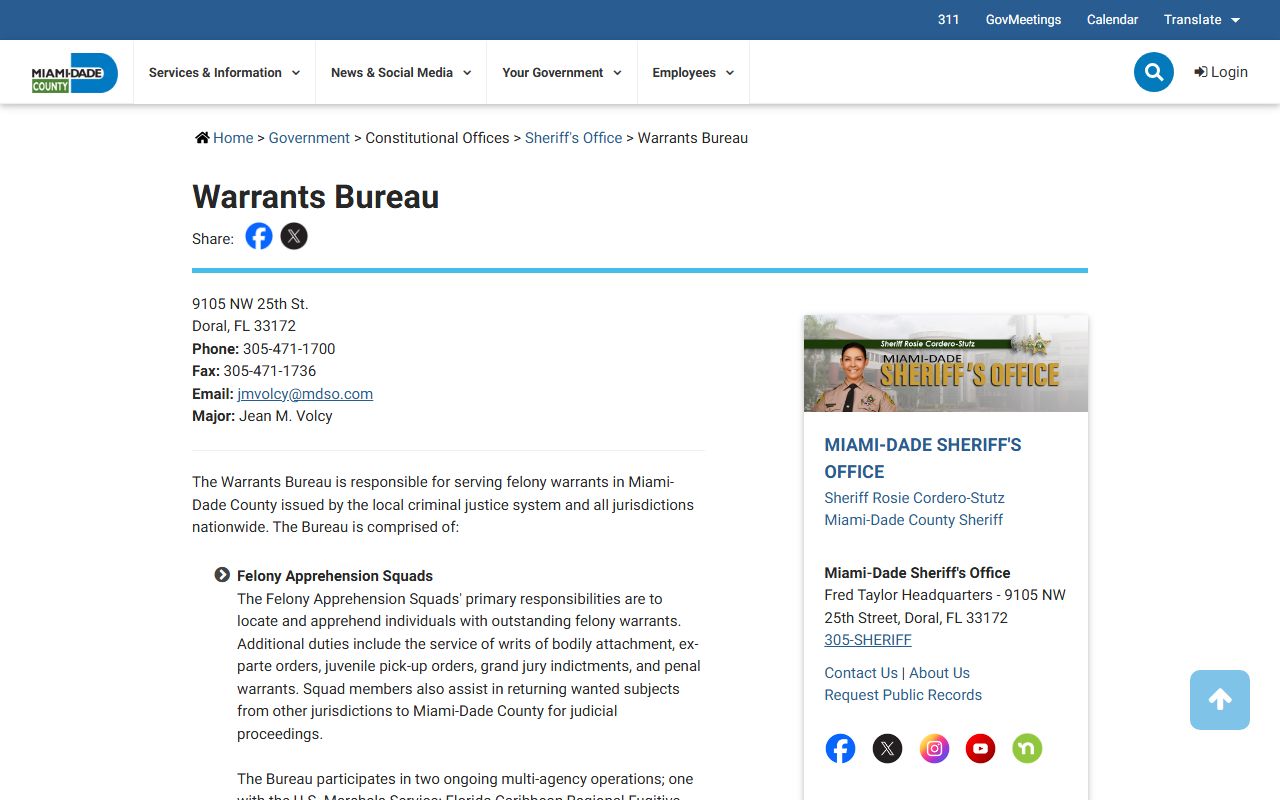
The Warrants Bureau in Miami-Dade County does more than just file paperwork. It has several active units that go after people with outstanding felony warrants. Felony Apprehension Squads locate and arrest individuals who have active warrants in Miami-Dade County. The Administration and Extraditions Unit handles the arrest and return of felony suspects from locations across the world. A Career Criminal Section enforces the Florida Career Offender Registration Act. The Desk Operations Unit runs around the clock and provides warrant verification to law enforcement nationwide.
The bureau works with federal task forces too. Miami-Dade County partners with the U.S. Marshals Service through the Florida Caribbean Regional Fugitive Task Force. They also work with FDLE on the Florida Fugitive Task Force. These joint efforts help track down wanted persons who may have left Miami-Dade County or the state of Florida.
The Warrants Bureau page on the sheriff's site has more details on how warrant enforcement works in Miami-Dade County.
Under Florida Statute 901.04, warrants are directed to all sheriffs in the state. That means a warrant issued in Miami-Dade County can be served by any sheriff in Florida. It also means warrants from other counties can be served here.
Note: Miami-Dade County warrant records may not show up on the FDLE database right away since agencies can take time to enter data into the statewide system.
Miami-Dade Clerk of Courts Records
The Miami-Dade Clerk of Courts keeps court case files that include warrant activity. When a judge signs a warrant in Miami-Dade County, the clerk enters it into the case record. Bench warrants and capias orders show up in criminal case dockets. You can search these records online for free.
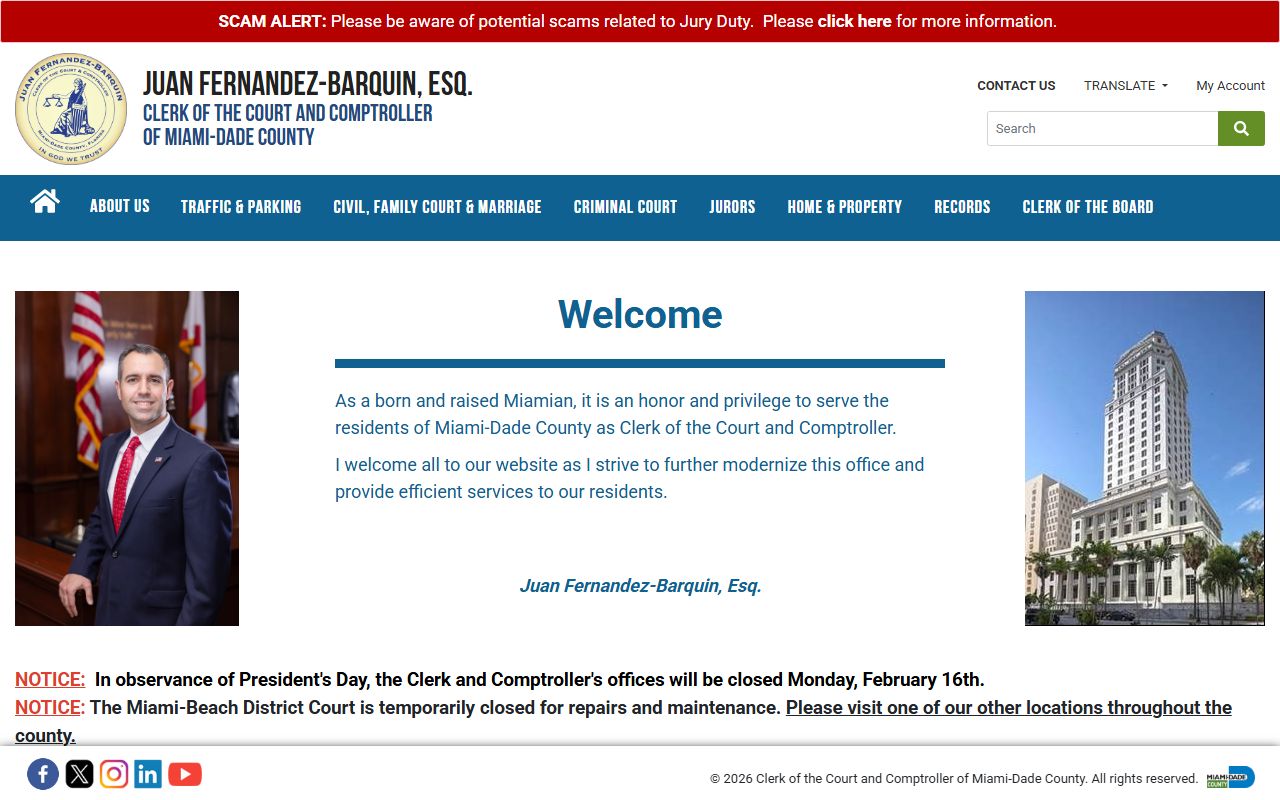
The clerk's online system lets you search by defendant name, case number, citation number, or jail number. Warrant activity appears in the case docket once it is filed. To get copies of specific documents, you can send a request by mail to Records Management at P.O. Box 14695, Miami, FL 33101, or email cocpubreq@miamidadeclerk.gov.
| Clerk of Courts |
Miami-Dade Clerk of Courts 20 NW 1st Avenue, Miami, FL 33128 Phone: (305) 275-1155 |
|---|---|
| Records Email | cocpubreq@miamidadeclerk.gov |
| Records Mail | P.O. Box 14695, Miami, FL 33101 |
How to Search Warrants in Miami-Dade
The fastest way to search for warrant records in Miami-Dade County is through the FDLE Public Access System. Go to the Wanted Persons search page and type in the name you want to check. The system is free. No account is needed. It shows active warrants reported by law enforcement from all 67 Florida counties, including Miami-Dade. Results show the warrant type and the issuing agency.
You can also search through the Miami-Dade Clerk of Courts online portal. That system shows bench warrants and capias entries in case dockets. The clerk portal is useful when you need details on a specific court case in Miami-Dade County. The sheriff's office does not offer a public-facing warrant search on its own site. Instead, they point people to the FDLE system for warrant lookups.
To search warrant records in Miami-Dade County, you can use:
- FDLE Public Access System for statewide active warrants
- Miami-Dade Clerk of Courts for bench warrants and capias in case dockets
- The Warrants Bureau phone line at (305) 471-1700 for direct inquiries
- In-person records request by appointment at the sheriff's office
Note: Warrants may appear on the clerk's website before they show up on the statewide FDLE database for Miami-Dade County.
Warrant Types in Miami-Dade County
Several kinds of warrants show up in Miami-Dade County records. An arrest warrant is the most common. A judge signs it after finding probable cause under Florida Statute 901.02. Bench warrants come from a judge when someone fails to show up for a court date. A capias is similar and can be issued by the Clerk of Circuit Court. All of these end up in the Miami-Dade County warrant system over time.
Other types include violation of probation warrants, fugitive warrants for people wanted in other states, and direct file arrest warrants from the State Attorney's Office. Search warrants are different from arrest warrants. Under Florida Statute 933.07, search warrants must be carried out within 14 days or they expire. Arrest warrants in Miami-Dade County do not expire. They stay active until the person is found or a judge recalls the warrant.
Public Access to Miami-Dade Warrants
Warrant records in Miami-Dade County are public under Florida's Sunshine Law. Florida Statute 119.07 says anyone can look at and copy public records held by state and local agencies. You do not need to be the person named on the warrant. You do not need to give a reason for your search. The law applies to the sheriff's office and the clerk of courts in Miami-Dade County.
Some limits do apply. Active criminal intelligence and investigative info can be held back under Florida Statute 119.071. Search warrants and their affidavits stay private until the warrant is served or law enforcement decides it cannot be carried out. Some officers also hold what are called "pocket warrants" that have not yet been entered into any database. If you think a warrant exists in Miami-Dade County but cannot find it online, talk to a criminal defense attorney who can check with the investigating agency on your behalf.
What to Do About a Warrant
If you find a warrant in your name in Miami-Dade County, talk to a lawyer first. Do not go to the jail or a police station on your own without legal advice. Under Florida law, if you turn yourself in on a warrant, you must go into custody before you can post bond. A licensed bail bondsman can help you with the steps. Some counties offer a "walk-through" process that takes a few hours rather than sitting in jail overnight.
Under Florida Statute 901.16, the officer making an arrest on a warrant must tell the person why they are being arrested and that a warrant has been issued. The officer does not need to have the physical warrant at the time of arrest but must show it as soon as possible if asked. Warrants in Miami-Dade County do not expire. Even very old warrants can still lead to arrest during a routine traffic stop or other contact with law enforcement.
Cities in Miami-Dade County
Miami-Dade County has over 30 cities and several large unincorporated areas. All warrant records in the county go through the Miami-Dade Sheriff's Office. City police departments handle local law enforcement, but warrants are processed at the county level.
Other cities in Miami-Dade County include Coral Gables, North Miami, Aventura, and Cutler Bay. All of these file warrant cases through the Miami-Dade County Sheriff's Office.
Nearby Counties
These counties border Miami-Dade County. If you are not sure which county handles a warrant, check the address where the offense took place. Warrants are filed in the county where the case was opened.