
Search Lafayette County Warrant Records
Lafayette County warrant records are handled by the Lafayette County Sheriff's Office and the Clerk of the Circuit Court in Mayo. With roughly 8,000 residents, Lafayette is one of the smallest counties in all of Florida. It sits in the 3rd Judicial Circuit in north-central Florida, sharing that circuit with Columbia, Dixie, Hamilton, Madison, Suwannee, and Taylor counties. Warrant records here are public under state law and can be searched through the FDLE database at no cost.
Lafayette County Quick Facts
Lafayette County Sheriff's Office
The Lafayette County Sheriff's Office runs all law enforcement operations in the county. This includes patrol, criminal investigations, and warrant service. The office is at 231 SW Courthouse Circle in Mayo. Call (386) 294-1221 for warrant questions or records requests. Given the county's very small population, the sheriff's office operates with minimal staff but covers a large rural area.
When a 3rd Judicial Circuit judge issues a warrant for someone in Lafayette County, the sheriff's deputies carry it out. Under Florida Statute 901.04, warrants are directed to all sheriffs in the state, so a Lafayette County warrant can be served anywhere in Florida. The reverse is also true. Deputies here can serve warrants from other counties if they come across someone who is wanted elsewhere.
Lafayette County does not have a dedicated warrant page on its website. The FDLE statewide database is the main public resource for checking active warrants here.
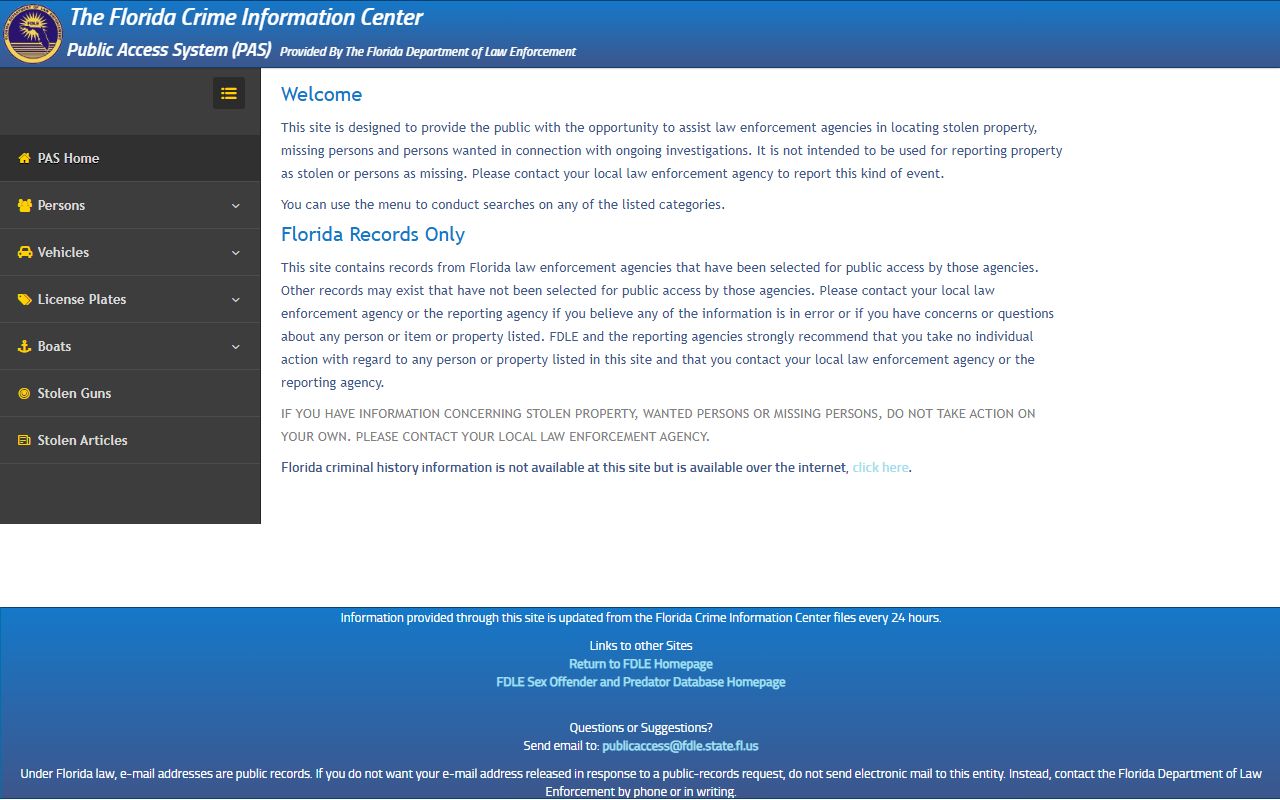
The FDLE system covers all 67 counties and is free to use for anyone.
| Sheriff's Office |
Lafayette County Sheriff's Office 231 SW Courthouse Circle, Mayo, FL 32066 Phone: (386) 294-1221 |
|---|---|
| Hours | Monday through Friday, 8:00 AM to 5:00 PM |
Lafayette County Clerk of Courts
The Lafayette County Clerk of the Circuit Court maintains all court records. The office shares the Courthouse Circle address in Mayo. Reach them at (386) 294-1600. When a bench warrant or capias is issued in a Lafayette County case, the clerk adds it to the case docket. That becomes part of the permanent record for the case.
Because Lafayette County is so small, there is no public-facing online case search portal. To check on a case or confirm whether a warrant has been issued, you need to call the clerk or go to the office in person. The staff can look up cases by name or case number. Copies of documents are available for a fee. The 3rd Judicial Circuit does have some resources on the Florida Courts website, but detailed Lafayette County case data is not available online.
| Clerk of Courts |
Lafayette County Clerk of Courts 231 SW Courthouse Circle, Mayo, FL 32066 Phone: (386) 294-1600 |
|---|
Note: The sheriff's office and clerk's office share the same address on Courthouse Circle in Mayo but are separate offices with different phone numbers.
How to Search for Warrants in Lafayette County
Start with the FDLE Public Access System. It is the only free online tool that covers Lafayette County warrant records. Visit the Wanted Persons search page and enter the name you want to check. No login is required. If the person has an active warrant in Lafayette County or any other Florida county, it will appear in the results.
If the FDLE database does not show anything, that does not always mean there is no warrant. In very small counties like Lafayette, there can be delays in entering data into the statewide system. A phone call to the sheriff's office is the most direct way to confirm. The clerk's office is another option for bench warrants tied to court cases.
Under Florida Statute 119.07, you have the right to access public records from any government agency in Florida. This applies to both the sheriff and the clerk in Lafayette County. You do not need to be the subject of the record, and you do not need to explain your reasons.
Warrant Types in Lafayette County
Lafayette County courts issue the same warrants as every other Florida county. Arrest warrants require probable cause. Under Florida Statute 901.02, the warrant must name the person and describe the offense. A judge signs it after reviewing a sworn affidavit from law enforcement. Arrest warrants stay active until the person is arrested or the judge recalls them.
Bench warrants happen when someone skips court. The judge issues the warrant right from the bench. It does not matter if the charge was a traffic ticket or a felony. Missing the date triggers a new warrant. In a small county like Lafayette, the judge and the clerk work closely, and bench warrants get processed fast.
Search warrants give officers the right to search a specific place. Florida Statute 933.07 requires that search warrants be served within 14 days. If not, they expire. This is the only type of warrant with a built-in time limit in Florida. Arrest warrants and bench warrants have no such deadline.
Public Records Law and Lafayette County
All warrant records in Lafayette County are subject to Florida's Sunshine Law. Florida Statute 119.07 guarantees the right to inspect and copy public records. This covers warrant records held by both the sheriff and the clerk. You can be anyone. You can live anywhere. The law does not require you to give a reason for wanting the records.
Some records are exempt from public access. Active criminal investigation files can be held back. Search warrant affidavits stay under seal until the warrant is executed. Juvenile records and sealed cases are also off-limits. But most warrant records, especially after an arrest, are fully open to the public.
In Lafayette County, a records request can be as simple as a phone call to the sheriff or the clerk. For anything more formal, a written request works best. The agency must respond within a reasonable time. Copy fees apply. If they refuse your request, they have to tell you which specific law exempts the record from disclosure.
Note: Lafayette County agencies typically charge about $0.15 per page for standard copies and $1.00 per page for certified copies.
Dealing with a Lafayette County Warrant
Get legal advice first. A criminal defense attorney can check the warrant and explain what you are facing. Do not go to the sheriff's office or jail without talking to a lawyer. Under Florida Statute 901.16, the arresting officer must inform you that a warrant has been issued and state the reason for the arrest. You do not need to see the paper warrant at the time of arrest, but you can ask for it.
Turning yourself in means going through the booking process. Bond gets set after that. A bail bondsman can help. In a small county like Lafayette, the process might be quicker than in a big city, but you still end up in custody until bond is posted. A lawyer can sometimes coordinate a smoother surrender.
Ignoring a warrant is not a strategy. Warrants do not expire in Florida. A Lafayette County warrant could follow you for years. Any contact with law enforcement anywhere in the state (or even nationally through NCIC) can result in arrest. Background checks for jobs, housing, or licenses will also flag the warrant. The Florida Sheriffs Association has links to all county sheriff offices in the state if you need to reach other agencies.
Nearby Counties
Lafayette County is surrounded by other rural north Florida counties. If the incident happened close to a county line, the warrant could be filed in a neighboring county instead. Check the jurisdiction where the offense occurred.