
Search Gulf County Warrant Records
Gulf County warrant records are kept by the Gulf County Sheriff's Office and the Clerk of the Circuit Court in Port St. Joe. This small Panhandle county has about 14,000 residents and sits along the Gulf of Mexico coast. The county is part of the 14th Judicial Circuit, which also covers Bay, Calhoun, Holmes, Jackson, and Washington counties. All warrant records in Gulf County are public under Florida law, and the quickest way to search them is through the FDLE statewide database.
Gulf County Quick Facts
Gulf County Sheriff's Office
The Gulf County Sheriff's Office is the primary law enforcement agency in the county. The office handles warrant service, criminal investigations, and patrol duties across the county. When a judge in the 14th Judicial Circuit signs a warrant for someone in Gulf County, the sheriff's deputies carry it out. The office is at 1000 Cecil G. Costin Sr. Boulevard in Port St. Joe. Call (850) 227-1115 for warrant questions.
Gulf County is one of the smaller counties in the Florida Panhandle, so the sheriff's office operates with a lean staff. Still, they follow all the same state procedures for warrant processing. Under Florida Statute 901.04, every warrant is directed to all sheriffs in the state. A warrant from Gulf County can be served anywhere in Florida.
The FDLE statewide system is the main public tool for checking warrants in Gulf County.
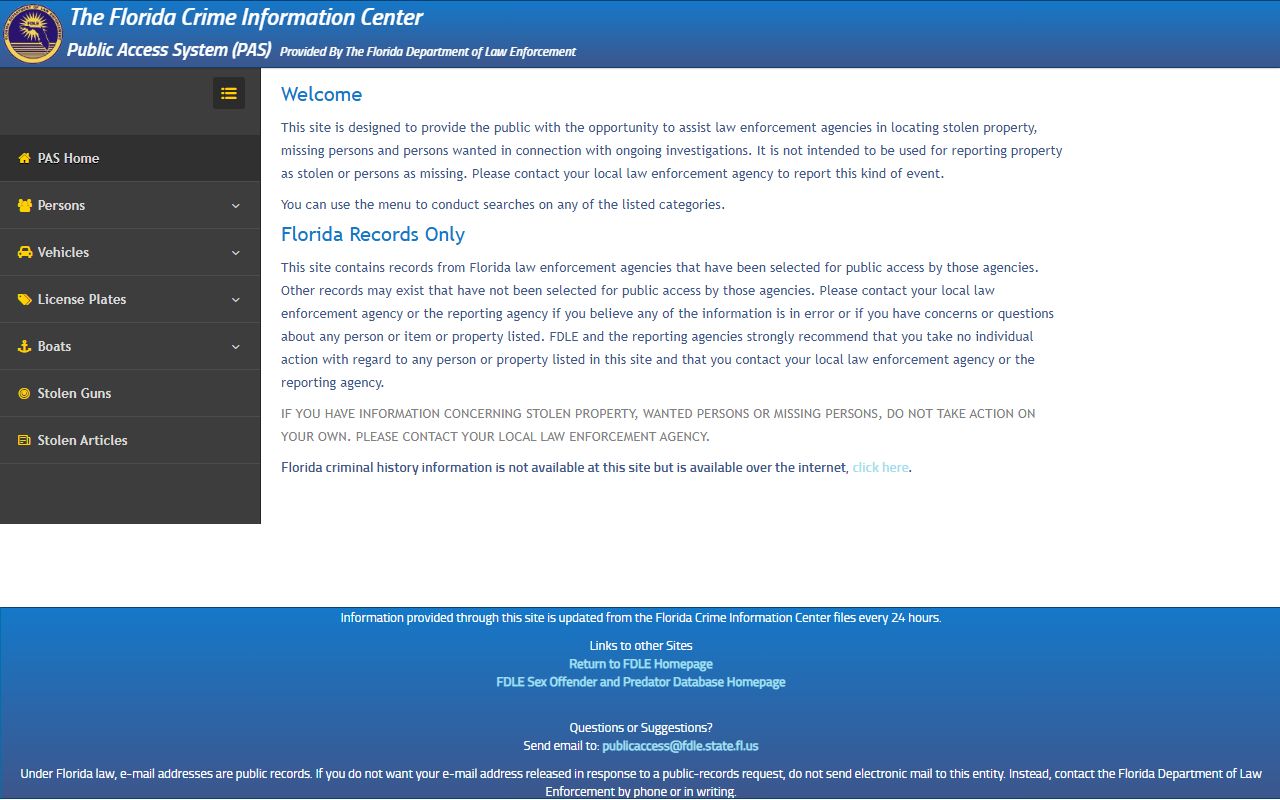
Visit the FDLE site to run a free search on any name. Results cover all 67 counties, so you can check Gulf County and beyond in one search.
| Sheriff's Office |
Gulf County Sheriff's Office 1000 Cecil G. Costin Sr. Boulevard, Port St. Joe, FL 32456 Phone: (850) 227-1115 |
|---|---|
| Hours | Monday through Friday, 8:00 AM to 4:00 PM |
Gulf County Clerk of Courts Records
The Gulf County Clerk of the Circuit Court maintains court case records, including those with warrant activity. When a judge issues a bench warrant or capias in a Gulf County case, the clerk logs it into the case docket. The clerk's office shares the same building complex on Cecil G. Costin Sr. Boulevard. Reach them at (850) 229-6112.
Gulf County does not have a full online case search portal like some of the bigger counties in Florida. If you want to look up a specific case, you may have to call or visit the clerk's office. The clerk can tell you if a bench warrant or capias is in the system for a particular case. For copies of court documents, expect to pay a small per-page fee as allowed under Florida law.
| Clerk of Courts |
Gulf County Clerk of Courts 1000 Cecil G. Costin Sr. Blvd., Port St. Joe, FL 32456 Phone: (850) 229-6112 |
|---|
Note: The clerk's office and sheriff's office share the same street address, but they are separate offices with different phone lines.
How to Search for Gulf County Warrants
Start with the FDLE Public Access System. This is the best online tool for checking warrants in Gulf County. It is free and open to the public. No login required. The system shows active warrants that have been reported by law enforcement agencies across Florida.
For a more targeted search, go to the FDLE Wanted Persons page. Enter the first and last name of the person you want to check. If they have an active warrant in Gulf County or any other Florida county, it should appear in the results. The listing shows the warrant type, the offense, and the issuing agency.
If the FDLE system does not show what you need, contact the sheriff's office by phone. Some warrants take time to get entered into the statewide database, especially in smaller counties where data entry is handled by fewer staff members. The clerk's office is another option for bench warrants and capias orders linked to court cases.
Under Florida Statute 119.07, you have the right to inspect and copy public records. This includes warrant records held by the Gulf County Sheriff and the clerk of court. You do not need to explain why you want the records.
Warrant Types Issued in Gulf County
Gulf County courts issue several types of warrants. The most common is an arrest warrant. Under Florida Statute 901.02, a judge signs an arrest warrant after reviewing probable cause presented by law enforcement. The warrant names the person and states the offense they are accused of.
Bench warrants are common too. These come from the judge when a defendant misses a court date or does not follow court orders. In Gulf County, bench warrants are often tied to misdemeanor cases. The defendant just forgot or did not get the notice. Either way, the warrant goes active and stays that way until the person is picked up or comes to court.
Search warrants work differently. Under Florida Statute 933.07, a search warrant in Gulf County must be served within 14 days. If it is not served in time, the warrant expires and the officer must return it to the issuing judge. Arrest warrants have no such time limit. They remain active until resolved.
Public Records Access in Gulf County
Florida's public records law is broad. Under Florida Statute 119.07, warrant records in Gulf County are open to the public. Anyone can ask to see them. You do not need to be the person named in the warrant. You do not need to live in Gulf County. The law applies the same way to the sheriff and the clerk.
Some records are exempt. Active criminal investigations can be kept confidential while the case is ongoing. Search warrant affidavits stay sealed until the warrant is executed. But once a warrant is served and an arrest is made, the records open up. This includes the arrest affidavit, the warrant itself, and booking details.
If a Gulf County agency denies your records request, they must cite a specific exemption in state law. You have the right to challenge a denial. The Florida Sheriffs Association has resources on how public records requests work across the state.
Note: Fees for copies of records in Gulf County typically run about $0.15 per page for standard documents.
What to Do If You Have a Gulf County Warrant
Find a lawyer first. That is the single most important step. A criminal defense attorney can look into the warrant, find out the charges, and help you figure out the best way to deal with it. Do not just show up at the jail. Under Florida Statute 901.16, an officer making an arrest on a warrant must tell you why you are being arrested and that a warrant exists. They do not need the paper warrant in hand at the time.
If you turn yourself in, you will be taken into custody. Bond is set after that. A bail bondsman can speed things up. In a small county like Gulf, the process can move faster than in a large metro area, but you still go through booking. A lawyer can sometimes arrange a surrender so the process is smoother.
Warrants do not disappear on their own. There is no time limit. A Gulf County warrant from five years ago is still valid today. You could get arrested during a traffic stop, a background check, or even when trying to board a flight. Dealing with it sooner is always better than waiting.
Nearby Counties
Gulf County borders several other Panhandle counties. If you are unsure where a warrant was filed, check the county where the offense took place. Warrants are issued in the county with jurisdiction over the case.