
Glades County Warrant Records
Warrant records in Glades County are managed by the Glades County Sheriff's Office and the Clerk of the Circuit Court in Moore Haven. This small rural county sits in south-central Florida along the western shore of Lake Okeechobee, with a population of roughly 12,000 people. Despite its size, the county follows the same warrant procedures as every other county in the state. You can search for active warrants here through the FDLE statewide system or contact local offices directly for case details.
Glades County Quick Facts
Glades County Sheriff's Office Warrants
The Glades County Sheriff's Office handles all warrant service in the county. It is a small agency but carries the same legal duties as larger offices across Florida. When a judge signs an arrest warrant in Glades County, the sheriff is the one who serves it. The office sits on East State Road 78 in Moore Haven. You can call them at (863) 946-1600 to ask about warrant status or records requests.
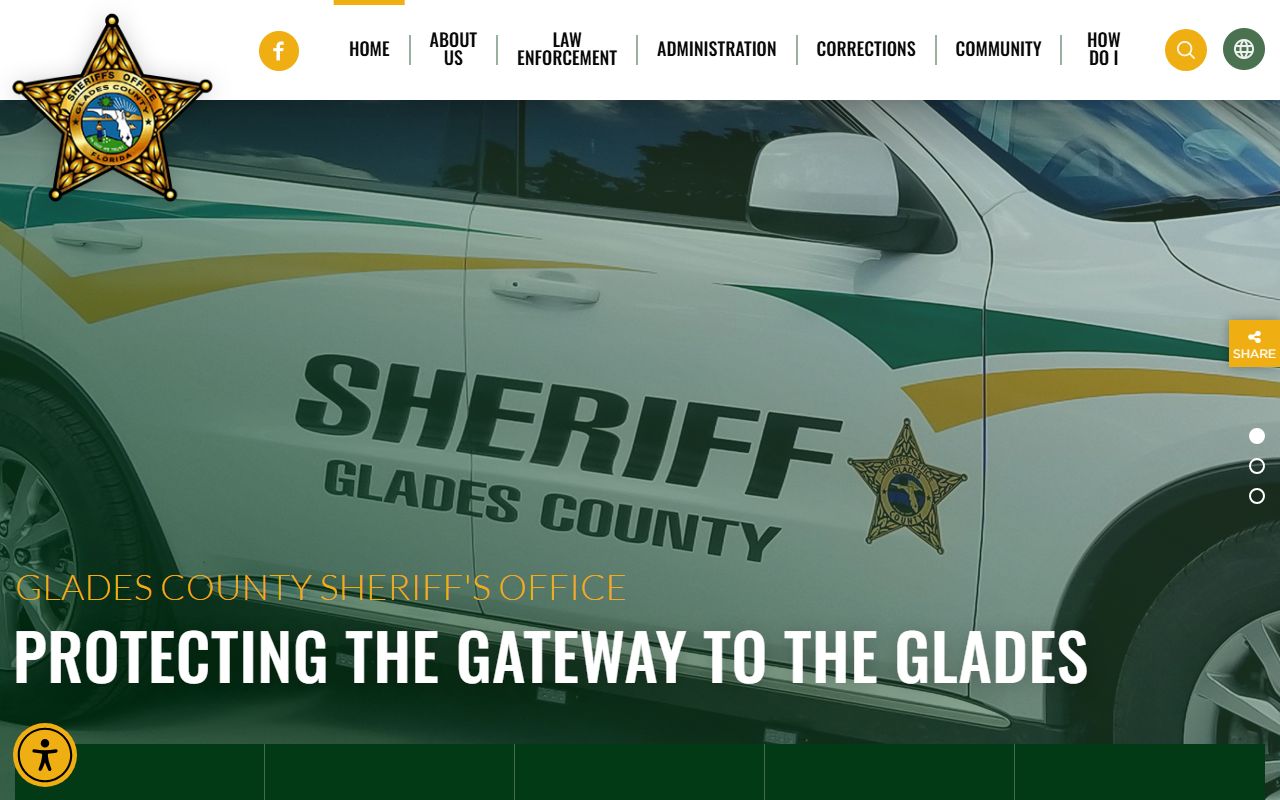
The Glades County Sheriff's Office website has general contact info and some details on law enforcement services in the area.
Because Glades County is part of the 20th Judicial Circuit, warrant cases here go through the same circuit court system as Charlotte, Collier, Hendry, and Lee counties. The circuit covers a wide area of southwest Florida, and judges can issue warrants that apply across the entire circuit.
| Sheriff's Office |
Glades County Sheriff's Office 1297 E. State Road 78, Moore Haven, FL 33471 Phone: (863) 946-1600 |
|---|---|
| Hours | Monday through Friday, 8:00 AM to 5:00 PM |
Note: Glades County has a small staff, so response times for records requests may take longer than in larger counties.
Glades County Clerk of Courts
The Glades County Clerk of the Circuit Court keeps all court case files, including cases with active warrants. Bench warrants and capias orders show up in the case docket once a judge signs them. The clerk's office is at 500 Avenue J in Moore Haven. You can reach them at (863) 946-6010.
Unlike some larger counties in Florida, Glades County does not have a full online case search portal on its website. To look up a specific case or check for warrant activity, you may need to call the clerk or visit in person. The 20th Judicial Circuit does have some online resources through the Florida Courts website, but detailed case-level data for Glades County is limited online.
| Clerk of Courts |
Glades County Clerk of Courts 500 Avenue J, Moore Haven, FL 33471 Phone: (863) 946-6010 |
|---|
How to Search Warrants in Glades County
The best way to search for warrant records in Glades County is through the FDLE Public Access System. Visit the Wanted Persons search page and enter the name you want to look up. It is free. No account needed. The system pulls active warrant data from all 67 counties in Florida, including Glades County. If someone has an outstanding warrant here, it should show up on that system once local law enforcement enters the data.
You can also go to the FDLE Public Access System homepage for a broader search. That page lets you check criminal history records, sexual offenders, and other public data across the state. For Glades County, the FDLE system is really the main online tool available since the local clerk does not offer a full case search on the web.
If you need more details than what FDLE shows, contact the sheriff's office or clerk directly. Phone calls are the fastest route. You can also submit a written records request. Under Florida Statute 119.07, all public records held by state and local agencies must be made available for inspection and copying. The agency can charge a fee for copies but cannot charge for just looking at records.
Types of Warrants in Glades County
Glades County courts issue the same types of warrants as every other county in Florida. Arrest warrants are the most common. A judge issues one after law enforcement presents probable cause under Florida Statute 901.02. The warrant must name the person or describe them well enough to identify them. It must also state the offense.
Bench warrants come from a judge directly. A judge issues a bench warrant when someone fails to appear for a scheduled court date, violates a court order, or does not follow probation terms. A capias is a type of arrest order that can be issued by the clerk's office or a judge. It serves a similar purpose. In Glades County, bench warrants and capias orders are common in misdemeanor cases where a defendant misses court.
Search warrants are a separate category. Under Florida Statute 933.07, search warrants must be executed within 14 days of being signed. After that, they expire and must be returned to the court. Arrest warrants do not have a time limit. They stay active until the person is arrested or a judge recalls them.
Note: Even old warrants from years ago can still result in arrest during a routine traffic stop in Glades County or anywhere else in Florida.
Public Access and Florida's Sunshine Law
Warrant records in Glades County are public records. Florida has one of the strongest public records laws in the country. Under Florida Statute 119.07, anyone can access public records without giving a reason. You do not have to be the person named in the record. You do not have to live in Glades County or even in Florida.
There are some exceptions. Active investigation files and criminal intelligence data can be kept from the public under certain conditions. Search warrant affidavits stay sealed until the warrant is served or law enforcement decides it will not be. But once a warrant is served and the arrest is made, the related records become open. This includes the arrest report, booking info, and the warrant itself.
Under Florida Statute 901.04, warrants are directed to all and singular sheriffs of the state. That means a Glades County warrant can be served by any sheriff in Florida. It also means that someone with a warrant here could be picked up in a different county entirely.
What to Do About a Glades County Warrant
If you find out there is a warrant in your name in Glades County, get legal help before doing anything else. Talk to a criminal defense attorney. They can check the details of the warrant and advise you on the best way to handle it. Under Florida Statute 901.16, the officer making an arrest must inform the person that a warrant has been issued. The officer does not need to have the paper warrant in hand at the time, but must show it if asked.
Turning yourself in can sometimes work in your favor. A judge may look at it as a sign of cooperation. But you still go into custody when you surrender on a warrant. A bail bondsman can help arrange bond so the time in custody is short. The Florida Sheriffs Association website has links to all county sheriff offices if you need to find contact info for other agencies.
Ignoring a warrant makes things worse. Warrants do not go away on their own. They stay in the system until the court deals with them. A routine traffic stop, a background check for a job, or even a visit to a government office can lead to an arrest on an old warrant.
Nearby Counties
Glades County borders several counties in south-central Florida. If the offense took place near a county line, the warrant could be filed in one of these neighboring counties instead. Check the location of the incident to find the right jurisdiction.